



What is woodworm?
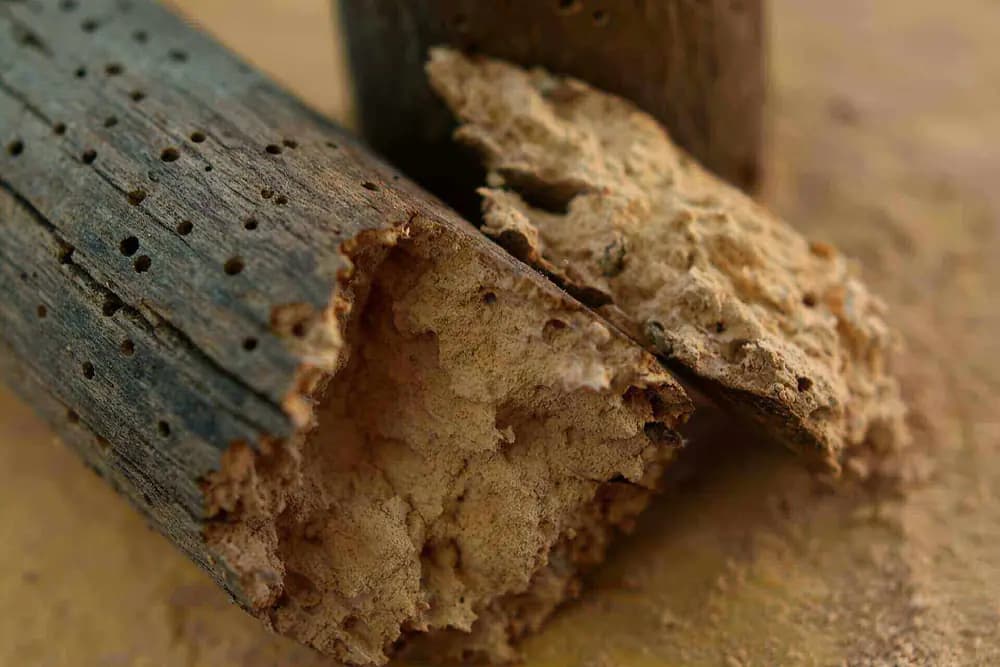
“Woodworm” covers several wood boring insects that lay their eggs on or in timber. The larvae feed on the cellulose in the wood, leaving a network of tunnels that damages and weakens the structure.
When the insects mature, the adult beetles bore out through the surface of the wood, leaving the round exit holes most people recognise as woodworm. Fresh, clean holes and fine dust usually mean the infestation is still active.
The woodworm treatment process
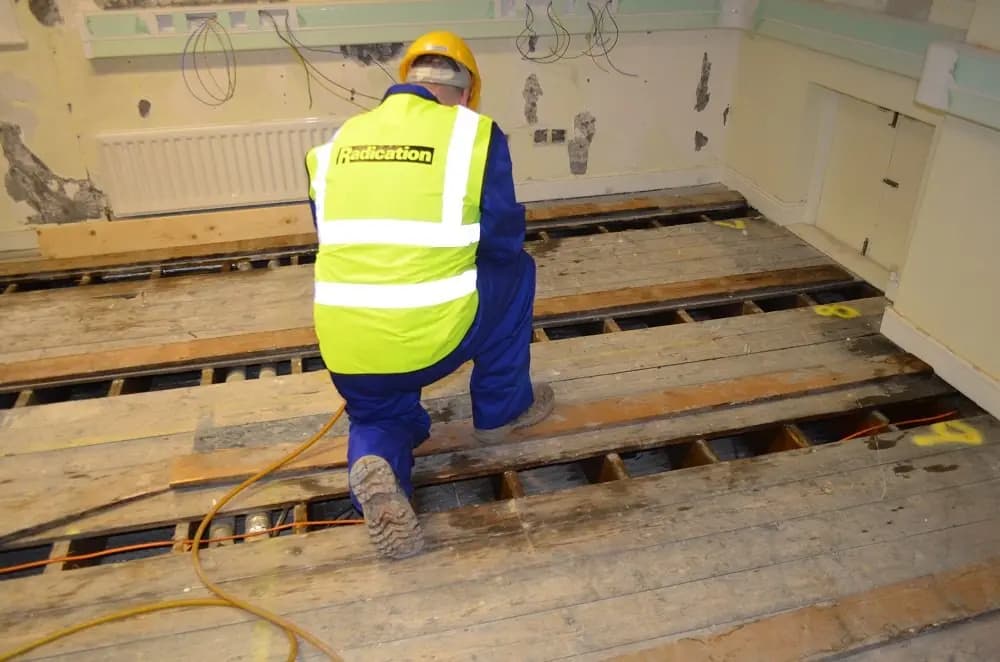
Get in touch and we will arrange a professional survey. Our surveyor confirms whether the infestation is active and how severe it is — this can mean lifting floorboards or accessing roof voids to see the affected timbers properly.
You then receive a detailed report with an estimate of the cost of any repairs and the full treatment process, so you know exactly what is needed before committing.
Our technicians carry out the treatment with as little disturbance to your property as possible. The chemicals kill the timber pests already active in the wood and penetrate the surface, preserving it against further attack.
How do I know if my woodworm is still active?
Holes on their own only tell you an infestation happened. They are exit holes, left by adult beetles flying off to lay eggs, and dormant woodworm from decades ago needs nothing doing to it. These are the signs that it is still going on:
- Exit holes with clean, sharp, pale edges, the colour of freshly cut timber
- Loose, powdery bore dust (frass) collecting directly beneath the holes
- Live or dead beetles on windowsills near the timber, typically May to August
- Timber that crumbles or lets a screwdriver sink in at the edge of the holes
What does a woodworm survey involve?
A woodworm survey should answer four questions: is the infestation active, what species is it, how far has it spread, and what is keeping the timber damp enough to sustain it. Answering them properly means seeing the structural timber, so our surveyors lift floorboards and get into roof voids and under-floor spaces rather than judging from the doorway.
The species matters. Common furniture beetle is by far the most frequent find in Northern Irish property and is manageable. House longhorn beetle is a more serious structural proposition, and death watch beetle tends to turn up in old hardwood in historic buildings.
You then get a written report setting out whether the infestation is active, the species, which timbers are affected, the cause, what needs doing and what it will cost. A fair number of the properties we look at turn out not to need treatment at all, and we would rather tell you that than sell you work you do not need.
What do we treat woodworm with?
We use a water-based microemulsion insecticide. It penetrates the timber to reach the larvae inside rather than just coating the surface, and it is low odour, quick drying and non-flammable, so a treated home can usually be used again quickly.
Microemulsion is the treatment for wood boring insects. Dry rot is a fungal problem and needs a different, fungicidal treatment, which is why the survey has to establish which one you are dealing with first.
Woodworm in churches and listed buildings
Historic buildings need a written specification, not a guess. Original timber is not a consumable: sound wood with old, dormant holes generally does not need replacing, and our approach is to establish what is structurally compromised, retain what is not and treat the remainder against further attack.
Woodworm treatment across Northern Ireland
We have surveyed and treated woodworm across the province for 59 years, from Belfast terraces to historic churches. We are Property Care Association members and TrustMark registered.